

Range Rover warning lights are designed to alert drivers when a system needs attention, but not all warnings mean the same thing. Some relate to routine maintenance, others indicate reduced system functionality, and a small number signal faults that should be addressed immediately.
Because Range Rover vehicles rely heavily on interconnected electronic systems, it is also common for multiple warning lights or messages to appear at the same time. This guide explains both the common and less common warning lights seen across the Range Rover range, and what they usually mean in real world driving.
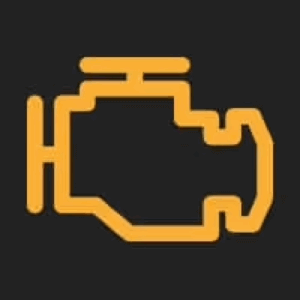
Engine warning light
The engine warning light relates to the engine management or emissions system. Causes can range from minor sensor issues to faults that affect engine performance.
If the light is steady, the vehicle is often driveable for a short time but should be checked soon. If the light is flashing, driving should be avoided as this can indicate a fault that may cause engine damage.
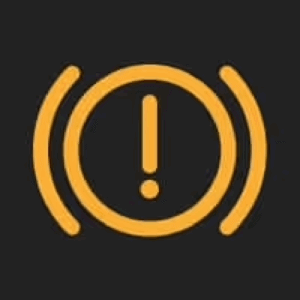
Brake warning light
This warning can indicate worn brake pads, low brake fluid, or an electronic braking system fault. Because braking performance may be affected, brake warnings should always be taken seriously.
Electronic braking systems on Range Rovers often require diagnostic testing to determine whether the issue is wear related or electronic.
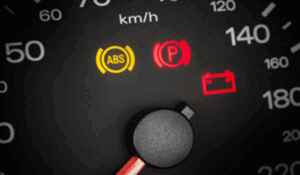
ABS warning light
An ABS warning indicates the anti lock braking system is not operating correctly. Normal braking may still be available, but ABS assistance during emergency braking may not function.
This warning often appears alongside traction control or stability system messages.
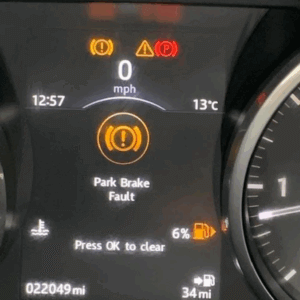
Electronic parking brake fault
This message indicates an issue with the electronic parking brake system. The vehicle may still drive, but the parking brake may not apply or release correctly.
Common causes include low battery voltage, motor faults, or system calibration issues.
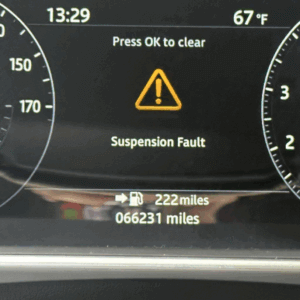
Suspension warning light
This warning relates to the suspension system, most commonly air suspension. It may appear with messages about restricted height adjustment or limited suspension operation.
Ride comfort and handling may be affected even if the vehicle remains driveable.
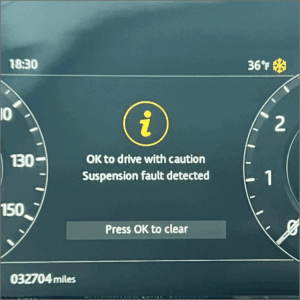
Suspension height restricted
This message is specific to Range Rover models fitted with air suspension.
It means the system has detected a fault and has limited ride height adjustment to protect components. The vehicle usually remains driveable, but clearance and ride quality may be reduced.
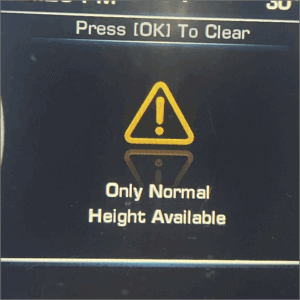
Normal height only
This message indicates the suspension is locked at a fixed ride height and cannot raise or lower.
It often appears after repeated suspension faults or compressor strain and should be inspected to prevent further damage.
Vehicle raising or lowering slowly
This message suggests the air suspension system is struggling to adjust height within normal time limits.
It can indicate early air leaks, compressor wear, or pressure related issues and is often an early warning before a full suspension fault appears.
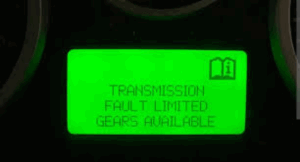
Transmission fault limited gears available
This message means the gearbox has detected abnormal operation and has restricted available gears to protect internal components.
The vehicle may enter a reduced performance mode and should be diagnosed promptly.
Drivetrain fault
A drivetrain fault message relates to systems that manage power distribution, transfer case operation, or differentials.
Because these systems are electronically controlled, faults can occur without obvious mechanical noise. Diagnostic testing is required to determine the cause.
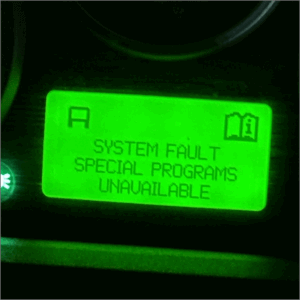
Special programs off
This warning relates to the Terrain Response system.
It means off road driving modes have been disabled, often due to a fault in another system such as suspension, ABS, or stability control. Even if the vehicle is not used off road, this system is closely linked to braking and traction.
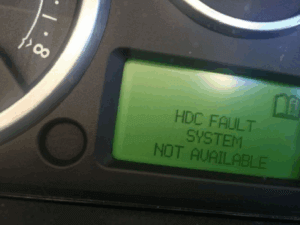
HDC not available
HDC stands for Hill Descent Control.
This warning indicates the system is unavailable, usually due to ABS, wheel speed sensor, or stability control issues. The vehicle may still drive normally on flat roads, but downhill assistance will not function.
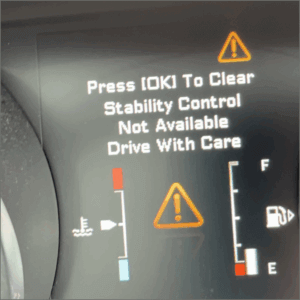
Steering or stability control warning
This warning means driver assistance systems related to stability or steering are limited or disabled.
Handling characteristics may change and diagnostic checks are recommended.
Battery or charging system warning
This warning indicates a problem with the charging system rather than the battery itself.
Low voltage can trigger multiple unrelated warning messages on Range Rover vehicles, making this one of the most common root causes of electrical faults.
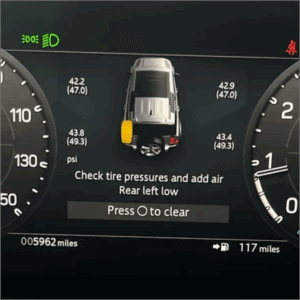
Tyre pressure warning light
This warning indicates one or more tyres are outside the recommended pressure range.
If the light remains on after pressures are corrected, the system may require resetting or further diagnosis.
Service reminder message
This is not a fault warning. It indicates scheduled servicing is due based on time or distance.
Ignoring service reminders can increase the likelihood of faults developing over time.
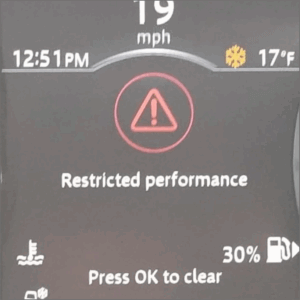
Reduced performance or limp mode messages
These messages indicate the vehicle has limited power to protect critical systems.
Driving may still be possible, but continued use without diagnosis can increase repair costs.
Why Range Rover warning lights often appear together
Range Rover systems are tightly integrated. A single underlying issue such as low battery voltage, a faulty sensor, or a communication error can trigger multiple warnings across different systems at once.
This is why clearing warning lights without diagnosis often results in them returning shortly after.
When it is safe to keep driving
Some warning lights allow limited driving, while others indicate faults that require immediate attention. If a warning is flashing, affects braking, steering, suspension, or is accompanied by unusual noises or reduced performance, the vehicle should be inspected as soon as possible.
If you are unsure, diagnostic testing provides clarity and helps avoid unnecessary repairs.
You can learn more about how these issues are identified on our Range Rover diagnostics Brisbane page, or explore related systems on our Range Rover suspension repairs Brisbane and Range Rover brakes Brisbane pages.
The takeaway for Range Rover owners
Range Rover warning lights are designed to protect the vehicle, not to cause panic. Some indicate routine maintenance, others signal reduced system functionality, and a few require urgent attention.
Understanding what each warning light means helps you respond appropriately and prevents small issues from becoming costly repairs. When in doubt, early diagnosis is always the safest option.